Paddy Hopkirk was a legendary figure in motorsport, particularly in rally racing, whose greatness stemmed from a combination of remarkable driving skill, historic achievements, and an enduring legacy that transcended the sport. Here’s what made him stand out:
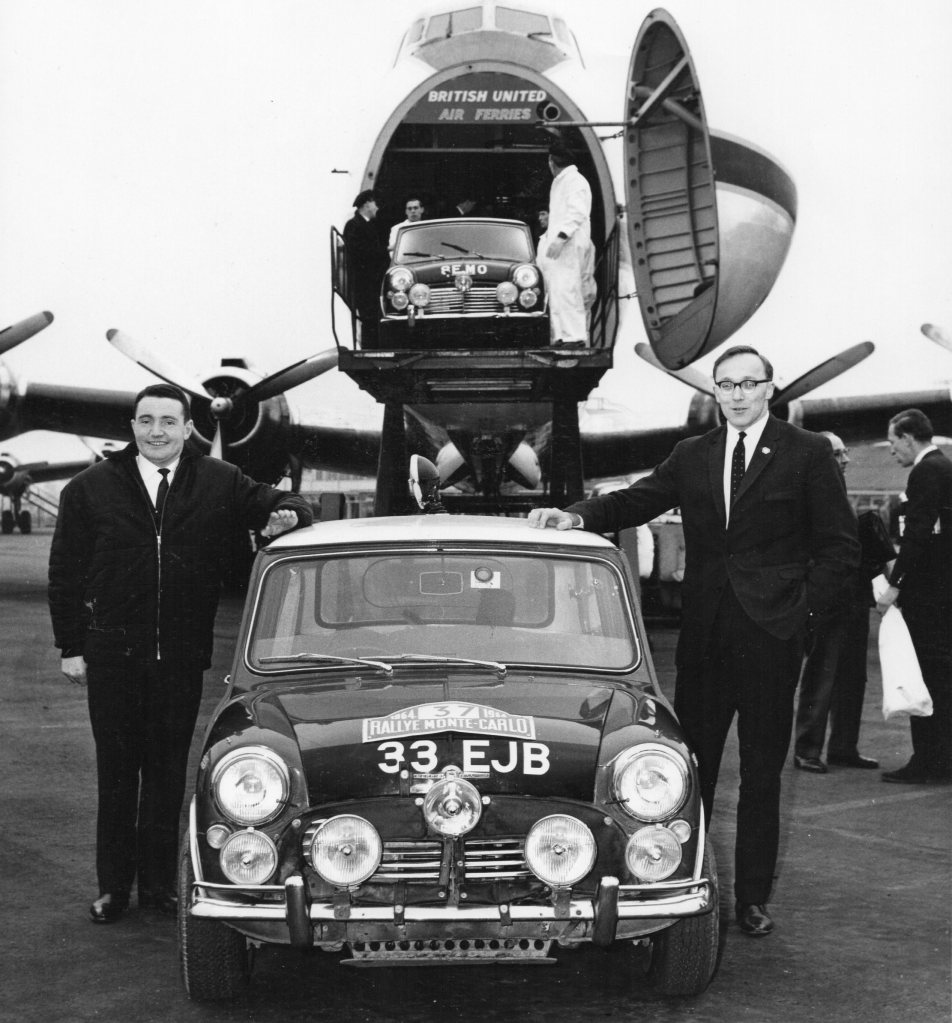
First and foremost, Hopkirk’s defining moment came with his victory at the 1964 Monte Carlo Rally driving a Mini Cooper S. This win was groundbreaking—not just for him, but for the automotive world. The Mini, a small, unassuming British car with a 1071cc engine, was an underdog against more powerful competitors like Ford Falcons and Mercedes-Benzes. Starting from Minsk in the Soviet Union alongside co-driver Henry Liddon, Hopkirk navigated treacherous icy roads and outmaneuvered the competition, including a dramatic showdown at the Col de Turini. His triumph wasn’t just a personal victory; it turned the Mini into a motorsport icon, proving that agility, preparation, and driver skill could outshine raw power. This achievement captured the imagination of 1960s Britain, earning him telegrams from the Prime Minister and The Beatles, and a spot on Sunday Night at the London Palladium—a testament to how his win resonated culturally during the Swinging Sixties. Beyond that singular triumph, Hopkirk’s career was packed with consistent success across diverse events. He won the Circuit of Ireland Rally five times, showcasing his dominance on home turf, and claimed victories in grueling races like the 1967 Acropolis Rally and the 1967 Alpine Rally, proving his versatility on varied terrains. His second-place finish in the 1968 London-to-Sydney Marathon—where he stopped to rescue a rival from a burning car—highlighted not just his skill but his sportsmanship. He also excelled in endurance racing, winning his class at the 1963 Le Mans 24 Hours in an MGB despite a 90-minute delay digging out of a sandbank, and took a class win at the 1964 Spa 24 Hours. These feats showed he wasn’t a one-hit wonder but a driver who could adapt and succeed in rally, circuit, and long-distance racing alike.
Hopkirk’s greatness wasn’t just in his results—it was in how he achieved them. He drove for the British Motor Corporation (BMC) under Stuart Turner, who led a tight-knit team that Hopkirk praised for their dedication. Despite the Mini’s modest resources compared to richer factory teams, Hopkirk’s preparation and intuitive feel for the car’s front-wheel-drive handling turned it into a giant-slayer. He once said the Mini “did everything you asked it to do,” reflecting a symbiosis between driver and machine that became legendary. His early start—learning car control at age nine on an invalid carriage—gave him an edge in skid control and adaptability that shone through in his career. Off the track, Hopkirk’s impact amplified his greatness. He became an ambassador for the Mini brand, later working with BMW on a special-edition Paddy Hopkirk Mini Cooper S. His business ventures, like founding Hopkirks Ltd. for automotive accessories, and his charity work—supporting causes like Skidz for young drivers and Wheelpower for wheelchair sports—showed a commitment to giving back. His 2016 MBE recognized both his motorsport legacy and his efforts in education and safety. As president of the British Racing Drivers’ Club (2017-2019) and a Rally Hall of Fame inductee in 2010, he remained a revered figure long after retiring.
What truly made Hopkirk great, though, was his character. Described as convivial, witty, and humble, he stayed grounded despite fame. His stories—like trading stockings for caviar in Minsk or joking about not knowing why he got the MBE—endeared him to fans and peers. He drove “for Queen, for Country, and everything that stood for British manufacturing,” as he put it, embodying a patriotic spirit that lifted the nation’s pride when he won.
In short, Paddy Hopkirk’s greatness came from his talent behind the wheel, his role in making the Mini a legend, his broad racing success, and his lasting influence as a sportsman and human being. He wasn’t just a driver; he was a cultural icon who changed how the world saw the Mini —and how rally fans saw what was possible.
 Paddy Hopkirk Memorial Foundation Inc.